
Throughout the many years I worked in journalism, I always wrote fiction. I would fill notebooks with my stories, and when the pages were full, the books went into a drawer. When the drawer became overloaded, its contents then went into the bin and I started again. Fiction was a hobby, a distraction, something to do while travelling or during the endless hours when my job dictated I had to wait for something exciting to happen which was worth reporting.
My day-to-day life was writing, and the thought of spending my spare time publishing fiction wasn’t one I considered, nor that Mrs C would have been happy about. It did mean everything I wrote was written for me, for my own amusement, with no concern whatsoever about what the outside world might think. It was freedom.
In my youth, I was a great fan of the Picaresque novel, a tradition which grew out of 16th Century Spain. These stories featured a central character, a Picaro if you will: typically a lower class everyman who needed to rely on his wits and guile to get by, with varying degrees of success. The tales usually had a very simple plot, a journey or quest, and the protagonist developed little as the story progressed. Once a Picaro, always a Picaro! Interestingly, often the Picaro would also be a tad bumbling and plagued by misfortune, Candide and Don Quixote being obvious examples.
During the Picaro’s journey, their mission would lead them into various different social situations, which were typically subjected to satirisation, usually highlighted by the protagonist’s inability to fit in.
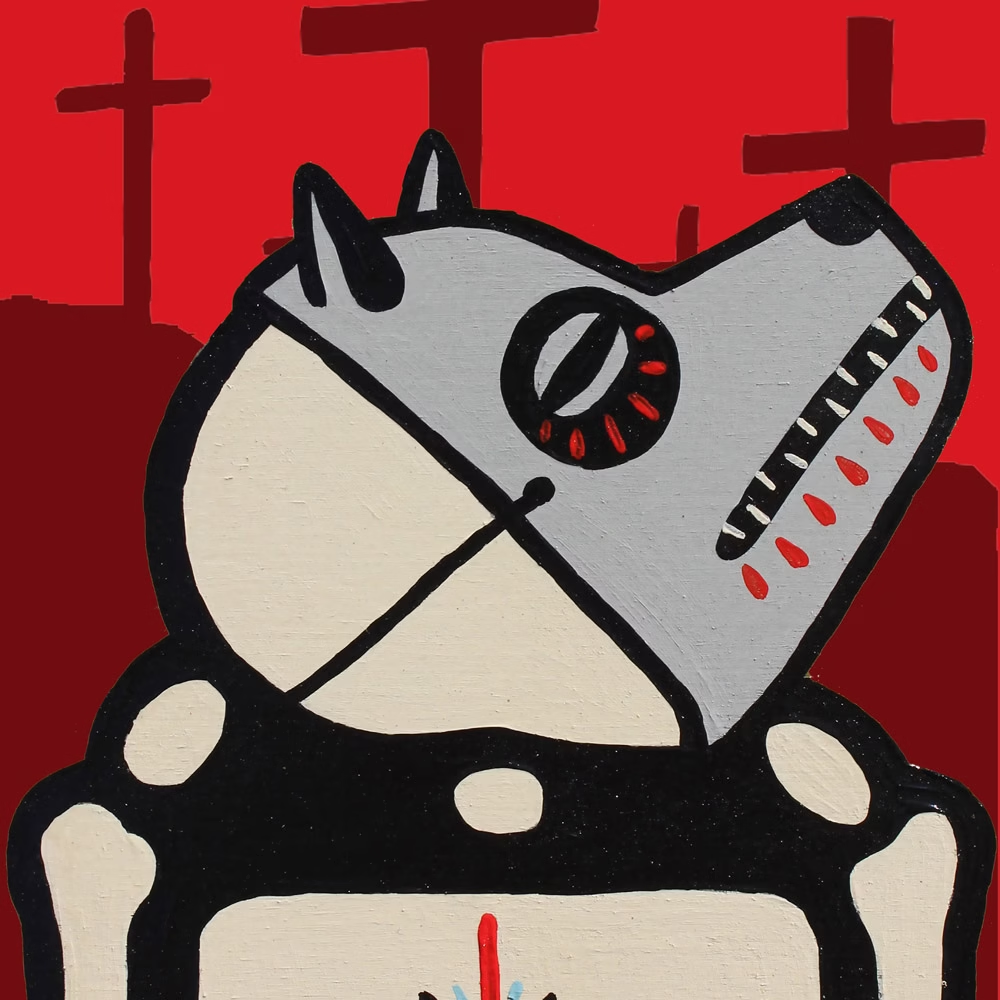
When I started writing The Devil’s Hairball, I didn’t intend it to be a Picaresque novel. In its early days, it was a bleak comedy about a man suffering a curse due to an unwitting act of sacrilege. Originally entitled One Man, One Bicycle, it was supposed to be a tale of guilt and remorse, but it took on a different life and went somewhere I hadn’t intended it to go!
I was probably half way through writing the book when I realised it was very much following the Picaresque novel tradition. Victor was, without doubt, a Picaro. He’d enjoyed a modicum of notoriety in his youth as a boxer, but since retiring, he’d become an everyman, under the thumb of his wife. Despite accepting his position in life, he still mourned for the person he used to be. Mildly depressed by his life, and riddled with pessimism, things only get worse when his act of sacrilege brings down a curse on his wife and daughter. In order to lift it, he needs to perform a quest. Despite his desire to not participate, the task is forced upon him.
The plot is very simple: he is faced with a dilemma and sets out on a journey to rectify it. His character doesn’t develop; it crumbles. He is, after all, a Picaro! When the book first came out, a few readers and reviewers saw these two points as negatives, which was fair. They are typical of the style, and it’s not for everyone. At the time, I didn’t defend the story by explaining the intention. My belief is that a book should stand on its own two feet, figuratively speaking.
The only Picaresque tradition I didn’t follow was writing it as a first person narrative. In truth, I needed to use third person for two reasons. The first was I wanted to show that Victor often blamed himself despite being manipulated by others, and also often blamed others when the fault laid entirely with himself! The second was it helped satirise the targets by allowing them to present their opinions, rather than everything being seen through Victor’s eyes.
And so we get onto the satire: religion. Well, it’s mostly religion! While the focus is predominantly on Christianity and, more specifically, Catholicism, it’s not the belief structure which becomes the target, but the organisations themselves. Some of the more extreme versions of other religions also crop up and cop a bit of flak. There is also a passing snipe at artificially intelligent technologies and robotics, long before such topics were in the public mindset!
Now, you might be thinking, why release a Picaresque novel as your first book? It doesn’t seem a smart move! My answer is, I don’t like things to be easy! However, the truth is different, and comes down to a pub meeting.
I’d arranged to go for a drink with a friend. He was running early, and I was running late. Subsequently, he ended up sitting in my living room, nursing a beer, while I showered and changed. During that time, he picked up a notebook laying on the table and started to read. When we were ready to leave, he asked if he could borrow the book. He’d read the first chapter and wanted to keep going.
A few days later, we met up again, and he told me I should edit and publish it. I only did so to shut him up. I stuck it on Amazon and promptly forgot about it, but some people seemed to like it.
I readily accept the Picaresque novel is an archaic style, and nowadays readers want plot twists, hidden agendas, perfect story arcs, and a cornucopia of sub-plots; all things this book doesn’t deliver, by design. However, if you like the Picaresque tradition and want cutting satire, evil henchmen, twisted characters, bawdy confrontations, and more than a lorryload of nastiness, maybe give it a try.